ServicesCrowns & Bridges
Crowns & Bridges in Worcester
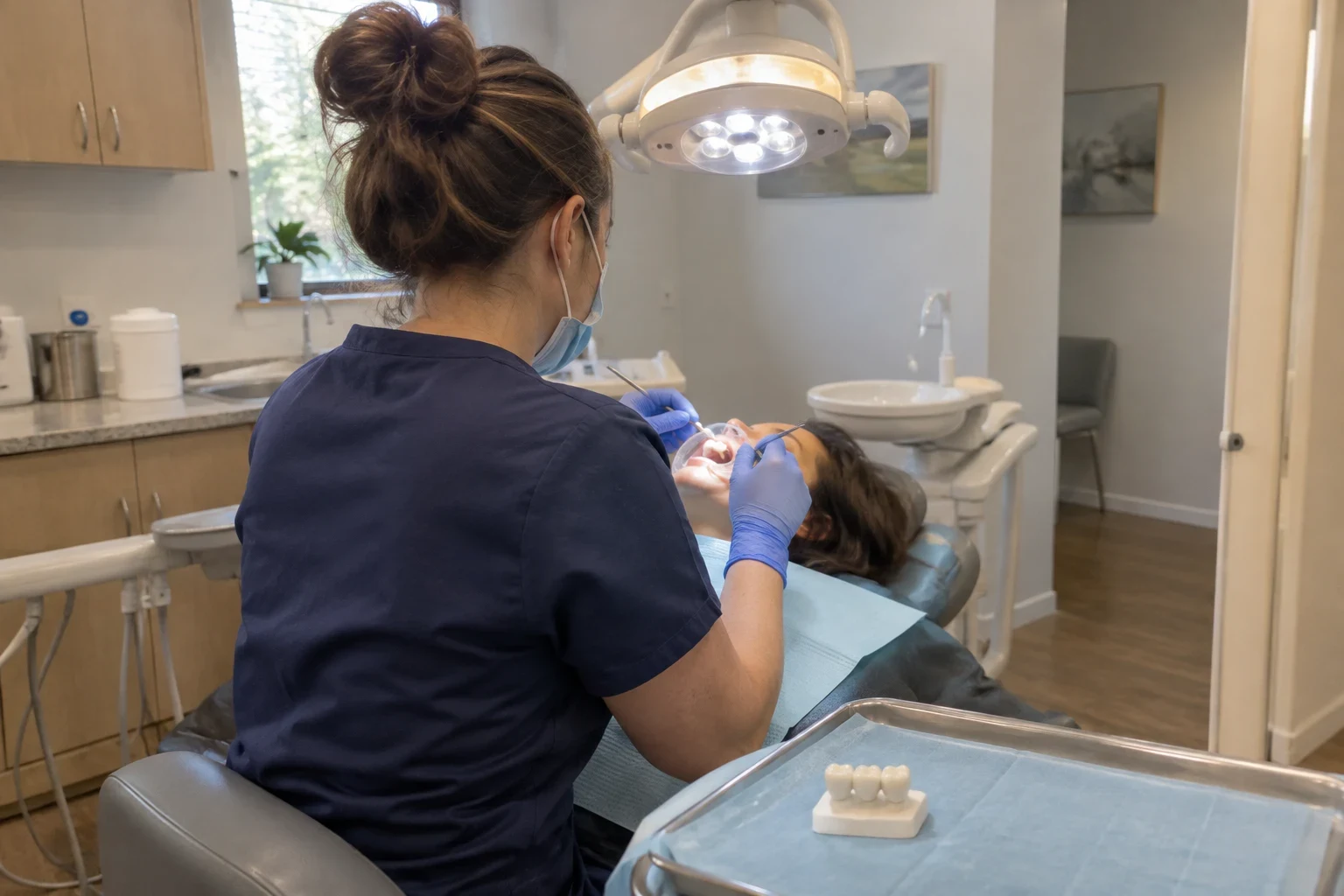
Maybe a back tooth split on something crunchy, an aging filling gave out again, or a missing tooth has one side of your mouth doing all the chewing. We check first whether a smaller repair will hold, and if a crown or bridge is wiser, we show you why before starting.
Saving the tooth you have, when it makes sense
A crown is a cap that covers a weakened tooth so it can take chewing pressure again. A bridge replaces a missing tooth by anchoring a false tooth to crowns on the teeth on either side. Both are solid, long-standing treatments, but neither should be the automatic answer.
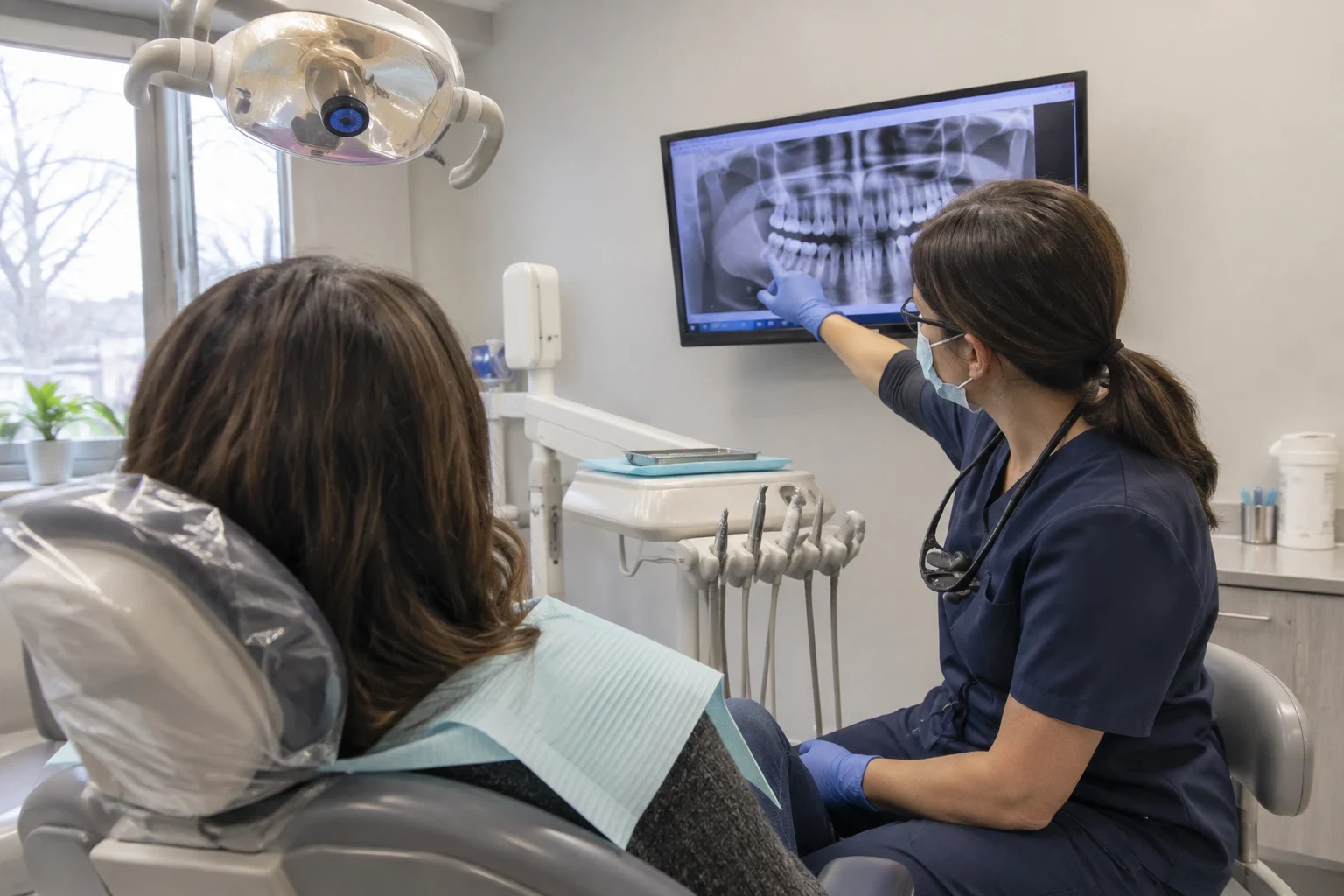
If a tooth has a small crack or a modest cavity, a filling often does the job for less money and less drilling. Our Fillings page covers that route. When more than about half of a tooth is gone, or a crack runs under a cusp, a filling tends to fail and a crown protects what is left. We explain where your tooth falls, using your x-rays and photos so you can see it too.
Patients come to us from Worcester and towns like Shrewsbury, Holden and Grafton for this kind of plain answer.
What crown and bridge care includes
A repair-or-crown assessment
We check the tooth, take x-rays and test your bite. If a filling or bonding can still do the job, we tell you so.
Photos of what we find
You see the crack, the decay or the worn filling on screen. It is easier to decide when you can look at the problem yourself.
Material choices explained
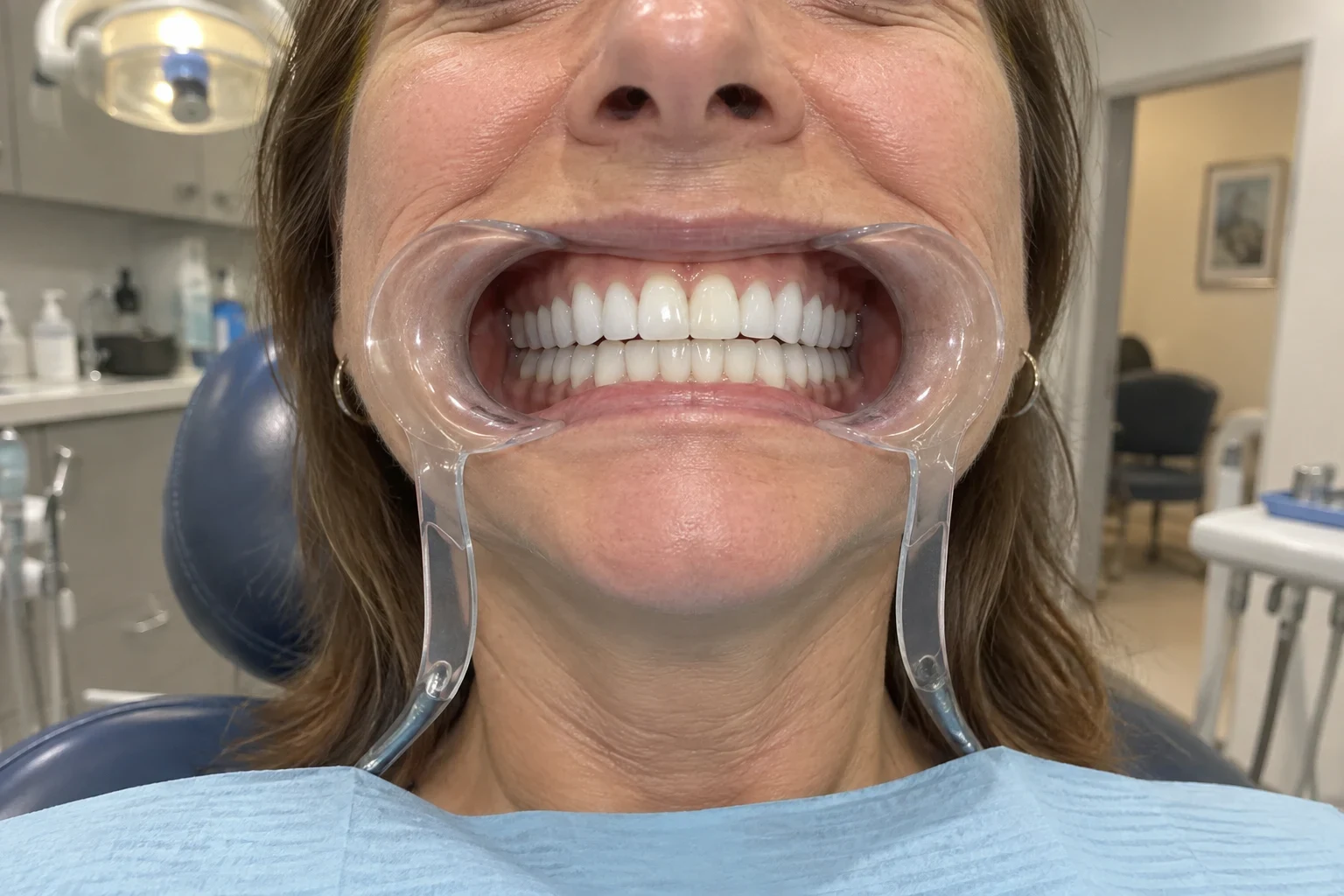
Porcelain and zirconia blend in with your smile. Stronger options suit back teeth that grind hard. We talk through how each one wears, chips and looks.
A temporary that keeps you comfortable
While your permanent crown or bridge is being made, a temporary protects the tooth so you can eat and smile normally.
Fit and bite adjustment
At the final visit we check the edges, the contact with neighboring teeth and how you bite before cementing anything in place.
Signs a crown or bridge may be worth a look
- Pain when you bite down
- A sharp twinge as you let go of a bite, especially on chewy food, often points to a crack. Finding it early can mean a smaller fix.
- Repeat repairs on one tooth
- Each time a tooth gets new filling material, the healthy structure around it gets thinner. After a few rounds, there may not be enough left to anchor another filling.
- A broken or chipped tooth
- When a piece breaks off a back tooth, the thin walls left behind can split further. Phone us for a visit soon so we can protect what remains.
- A gap from a lost tooth
- Teeth next to an empty space can slowly tip into it, and the tooth above can drift down. A bridge keeps your bite where it belongs.
- An old crown with dark edges or decay
- Crowns wear out eventually. Sometimes we can patch the edge, and sometimes a new crown is the better answer.
How the visits go
- 1
Exam and honest options
We look at the tooth, review x-rays and walk you through repair and crown options with what each one costs. You leave with a written treatment plan and time to think.
- 2
Preparing the tooth
After numbing the area, we gently shape the tooth and take an impression. You go home with a temporary crown or bridge the same visit.
- 3
Fitting the final restoration
About two weeks later, we remove the temporary, try in the permanent piece, adjust the bite and cement it once you are happy with the fit and color.
- 4
A quick follow-up
If anything feels high or sensitive in the days after, we see you again and adjust it. Your regular Exams & Cleanings keep an eye on it from then on.
What affects the cost of a crown or bridge
Your price depends on what the exam actually shows, so you get a clear breakdown before any treatment starts. Most dental insurance plans are accepted here. If you have no coverage, our Office Dental Plan is an option, and the CareCredit Patient Payment Plan lets you spread the cost over time.
- Crown or filling
- When a filling will hold, it costs far less than a crown. We settle that question first.
- Number of units
- A single crown counts as one unit. A three-tooth bridge counts as three, so it runs higher than one crown.
- Material
- Porcelain, zirconia and metal options vary in price, strength and appearance. We pick the material based on where the tooth sits and how hard you bite.
- Work needed underneath
- Deep decay may call for a core buildup before the crown goes on, and an inflamed nerve has to be treated first. Either one adds to the total.
- Your insurance plan
- Many plans pay part of a crown or bridge once a waiting period or deductible is met. We go over what your plan shows so you know your share before you decide.
Crown and bridge questions
- Do I really need a crown, or can you just fill it?
- Sometimes a filling is the right call, and we will say so. When a large part of the tooth is gone or a crack runs deep, a filling is likely to break again, and a crown protects the tooth from splitting. We show you the x-rays so the reasoning is clear.
- Does getting a crown hurt?
- The tooth is fully numbed while we work, so most patients feel pressure rather than pain. Some sensitivity to cold for a few days afterward is common and usually fades on its own.
- How long will a crown or bridge last?
- It depends on your bite, grinding habits and how well you clean around it. Many last for many years with good brushing, flossing under the bridge and regular checkups.
- What if my temporary crown comes off?
- Keep it, avoid chewing on that side, and phone us to set up a time to recement it. A temporary is held with soft cement on purpose, so this happens now and then.
- Is a bridge better than leaving the gap?
- Not always. A gap at the very back may cause few problems, while a gap in the middle of your bite often lets nearby teeth shift. We talk through the trade-offs, including the fact that a bridge involves shaping the teeth beside the gap.
Find out if your tooth can be saved
Bring us the cracked tooth, the worn filling or the gap you have been putting off. We will look closely and give you a straight answer about what it needs.