ServicesInvisalign / Clear Aligners
Invisalign and Clear Aligners in Worcester
Clear aligners straighten teeth gradually with a series of thin, removable trays. We check your gums, fillings and bite first, so you start treatment on healthy teeth and know what to expect from the first tray to the last.
Straighter teeth without brackets or wires
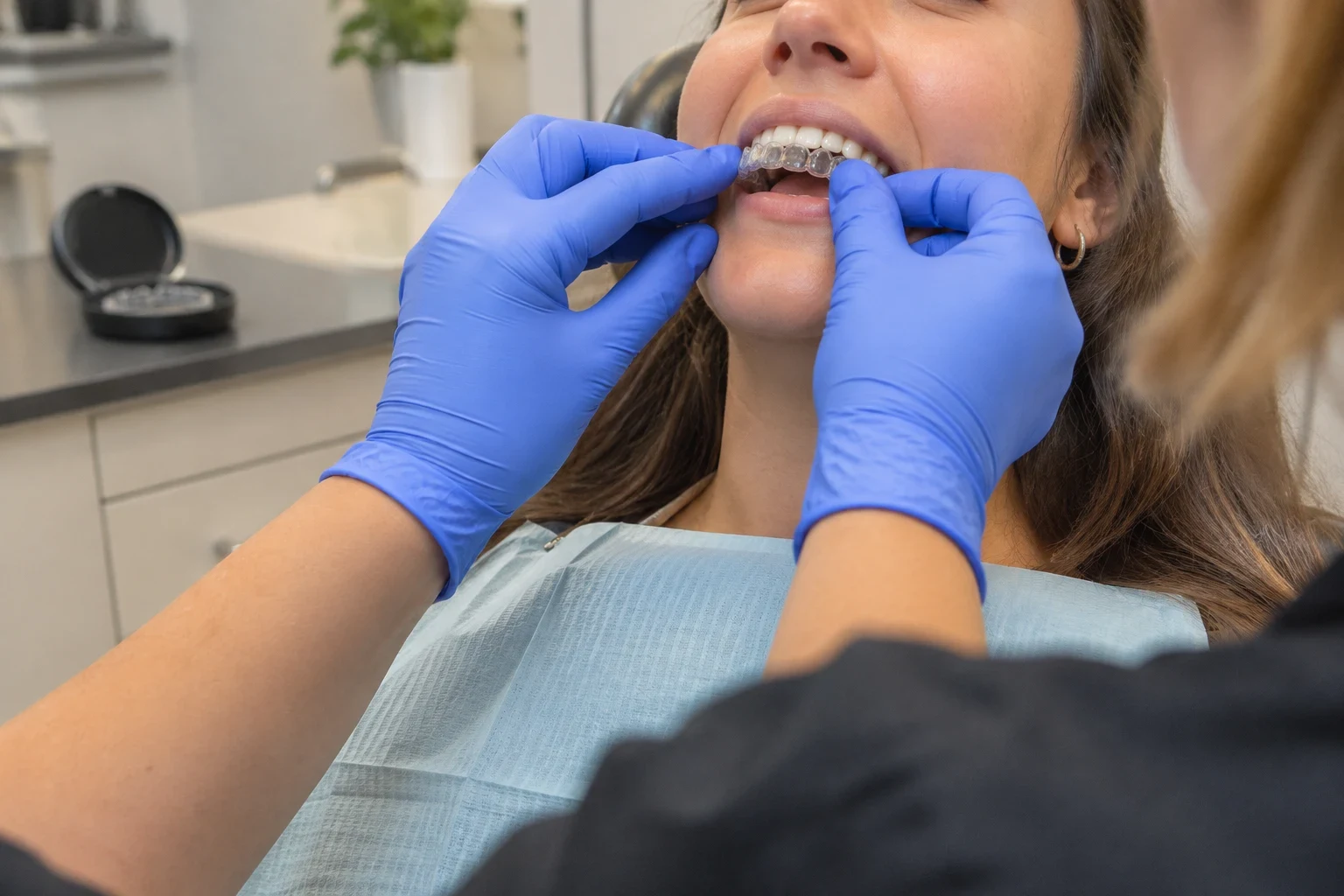
Clear aligners are custom plastic trays that each move your teeth a small amount. You wear each set for a short stretch, then switch to the next one. They come out for meals and brushing, and most people around you won't notice them.
Aligners work well for crowding, small gaps, teeth that have shifted since childhood braces, and many mild bite issues. They are not the answer for every smile. Some problems are better solved with a simpler fix, such as reshaping one chipped edge or replacing an old filling, and a few complex bites need a different approach. We tell you which camp you are in at your first visit.
Patients come to us from Worcester and nearby towns like Shrewsbury, Holden and Auburn, and the steps are the same for everyone: a careful exam first, then a clear treatment plan you can think over.
What your aligner treatment includes
A full exam to start
We look for cavities, gum inflammation and worn fillings first. Moving teeth that have untreated problems can make those problems worse, so we sort them out ahead of the first tray.
Digital scans and X-rays
Scans of your teeth replace the goopy impressions many people remember. Along with X-rays, they show how your roots sit and how far each tooth can safely move.
A preview of your result
You see a step-by-step model of how your teeth are planned to move and roughly how many trays it will take. If the result isn't what you hoped for, you can ask questions and take your time deciding.
Attachments when needed
Some teeth need small tooth-colored bumps attached to them so the trays can grip and turn them. They are polished off when treatment ends.
Regular progress checks
Short visits every several weeks let us confirm the trays fit and teeth are tracking as planned. If a tooth lags behind, we adjust the plan instead of pushing ahead.
Retainers to hold the result
Teeth tend to drift back after treatment. We fit retainers and explain how often to wear them so your new smile stays put.
Signs clear aligners may be right for you
Crowded or overlapping teeth
Teeth that overlap are harder to floss and tend to trap plaque. Straightening them can make daily cleaning easier.
Gaps that keep catching food
Small spaces between teeth often close well with aligners.
Your teeth moved after old braces
It's common for teeth to shift years after braces, especially if a retainer went missing. Aligners are often a good way to bring them back.
Uneven wear or a chipped edge from your bite
When teeth hit each other at the wrong angle, enamel can wear or chip. Sometimes fixing the bite protects teeth better than patching them again and again. Other times a single small repair is all you need, and we'll say so.
You want a discreet option
Adults who don't want metal brackets for work or photos often prefer trays they can remove.
How treatment works, step by step
- 1
Consultation and exam
We talk about what bothers you about your smile, check your teeth and gums, and take X-rays. If aligners aren't a good fit, you hear that up front.
- 2
Scans and treatment plan
We scan your teeth and build a plan showing the movement, the expected number of trays and any attachments. You get a written breakdown of the cost to review at your own pace.
- 3
Your first trays
At the fitting visit we place attachments if needed, check the fit and show you how to put trays in and take them out. Expect some pressure for a day or two with each new set; that means they're working.
- 4
Wearing and checking in
You wear the trays most of the day and night, removing them to eat and drink anything but water. We see you periodically to track progress.
- 5
Finishing and retainers
Once your teeth reach their planned spots, we remove attachments, polish the teeth and fit your retainers.
What affects the cost of clear aligners
The price of aligners comes down mostly to how far your teeth have to travel and how many months that takes. Once we have your exam and scans, we write up an estimate based on your own teeth, not a guess. We accept most dental insurance plans. If you have no coverage, our Office Dental Plan is one option, and the CareCredit Patient Payment Plan is another way to break the total into smaller payments.
- How complex the movement is
- Nudging one tooth to close a small space takes far fewer trays than sorting out crowding on both the upper and lower teeth. More trays and a longer timeline raise the cost.
- Work needed first
- A cavity, gum treatment or a cracked filling has to be taken care of before the first tray goes in. We list that work as its own line so you can see each part of the bill.
- Refinement trays
- Some teeth need a second, shorter round of trays to finish. We tell you early whether that is likely in your case.
- Retainers after treatment
- A retainer is what keeps the result in place. We explain which type suits you and how it affects the total.
- Your insurance coverage
- Adult orthodontic benefits vary a lot from plan to plan, and many plans leave them out. We help you look at what yours includes before you commit, so the numbers don't change once treatment starts.
Answers to common clear aligner questions
Something not covered here? (508) 571-6732
Do I have to wear the trays all the time?
Close to it. The trays stay in through the day and overnight, coming out only for meals, drinks other than plain water, and brushing. Leaving them out for long stretches slows tooth movement and can add weeks to treatment. Your plan will spell out the exact daily target.
Do clear aligners hurt?
Most people feel pressure or mild soreness for a day or two after switching to a new set. It usually fades quickly. Soft foods and putting new trays in at bedtime help many patients.
How long does treatment take?
It depends on how far your teeth need to move. Simple cases finish much sooner than ones involving crowding on both upper and lower teeth. Your treatment plan shows an estimated timeline up front, so you know what you're signing on for.
What if aligners aren't right for me?
We'll tell you plainly. Sometimes a smaller fix, like smoothing a chipped tooth or replacing a worn filling, solves what bothered you without months of trays. If your bite needs something aligners can't do, we explain why so you can decide your next step.
When is the best time to whiten my teeth if I'm getting aligners?
Usually after treatment is done. The small attachments bonded to some teeth can block the whitening gel, which may leave lighter and darker patches once they come off. Most patients schedule teeth whitening after their retainers are in, and we're happy to go over the timing with you at a visit.
Will I need a retainer forever?
Teeth naturally shift over a lifetime, so some retainer wear is usually needed long term. Often that becomes nighttime wear after the first stretch. We'll show you how to care for it.
Find out if aligners suit your smile
An exam and a straight answer are the first step. We'll check your teeth, explain your options, and only suggest aligners if they make sense for you.