ServicesExtractions
Tooth Extractions in Worcester
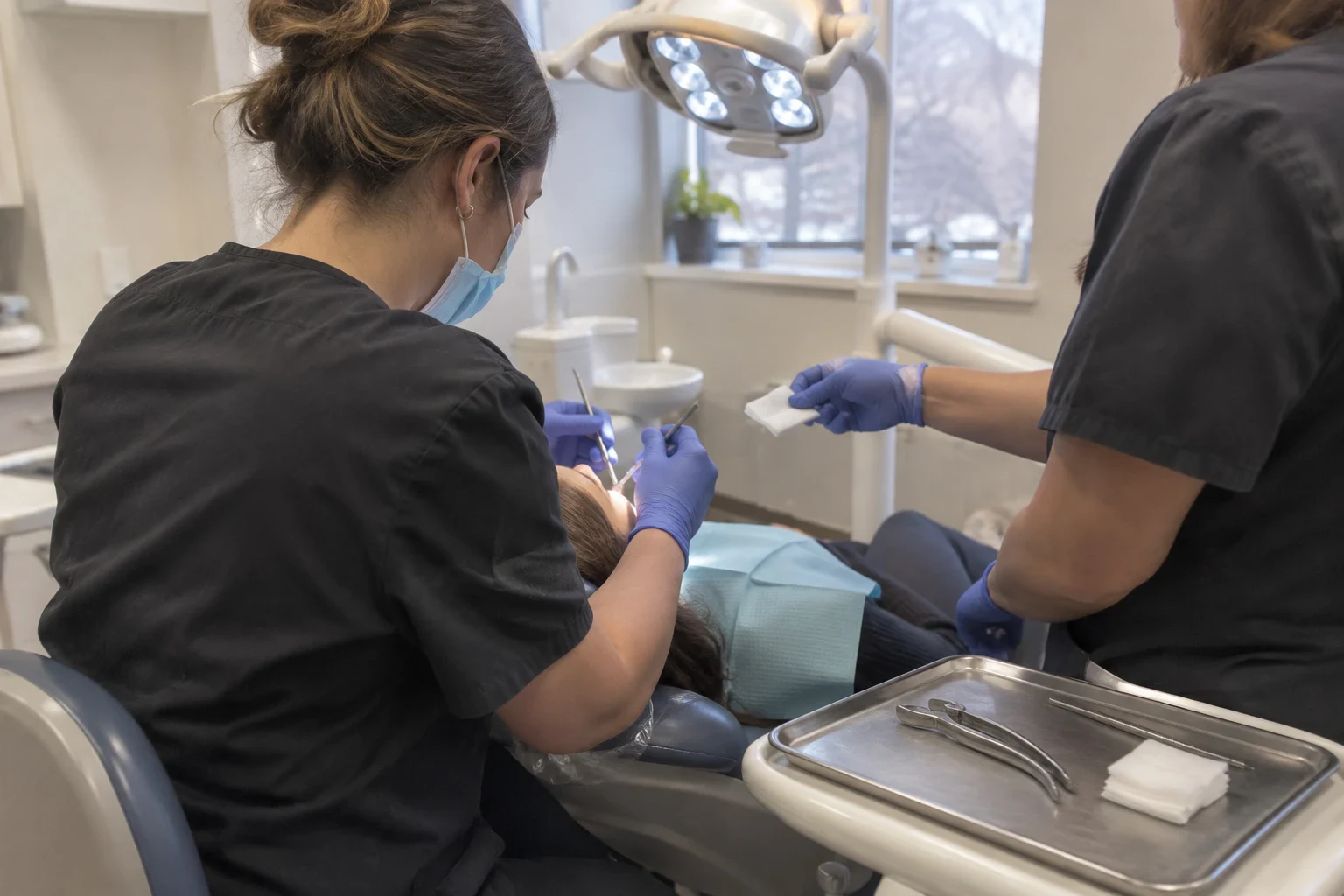
A painful or broken tooth doesn't always have to come out. We check first whether a filling or crown can save it. When removal really is the better choice, we numb the area well, work gently and send you home with clear aftercare steps.
Removing a tooth only when it makes sense
Your own tooth is usually worth keeping. A cracked or decayed tooth can often be rebuilt with a filling or protected with a crown, and that keeps your bite and jawbone working the way they should. So the first thing we do is look closely at what's left of the tooth and tell you honestly whether repair is realistic.
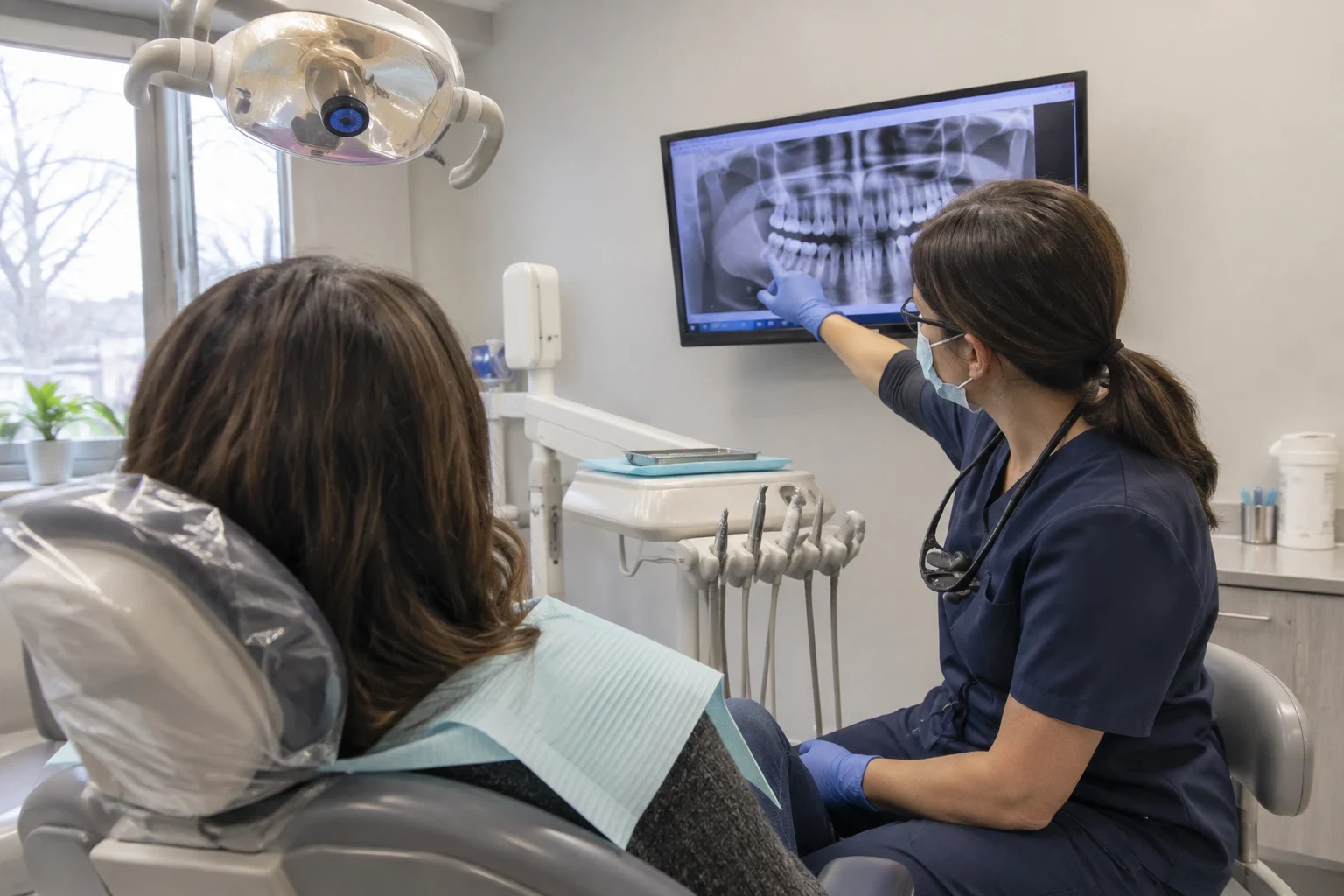
Sometimes it isn't. A tooth split below the gumline, decay that has reached deep into the root, a wisdom tooth with no room to come in, or a tooth loosened by advanced gum disease can cause more trouble kept than removed. In those cases we explain why, show you what we see on the X-ray and walk you through every step of the extraction ahead of time.
We see adults and families from Worcester and nearby towns like Shrewsbury, Auburn and Holden, and we plan every visit around keeping you comfortable.
What your extraction visit includes
- An exam and X-ray first
- We look at the tooth, the roots and the bone around it. That tells us whether it can be saved and, if not, how it should come out.
- A straight answer on repair versus removal
- If a filling or crown would do the job, we say so. If removal is the better path, we explain the reasons in plain language so you can decide.
- Thorough numbing
- We wait for full numbness and check in with you as we work. You'll feel pressure, but you shouldn't feel sharp pain.
- Simple and surgical removals
- Most teeth come out in one piece with gentle rocking. Teeth that are broken at the gumline or have curved roots may need to be removed in sections. If a tooth is deeply impacted, we'll tell you and point you to an oral surgeon.
- Written aftercare and a follow-up
- You leave with gauze, simple instructions and a clear idea of what normal healing looks like over the next week.
Signs a tooth may need to come out
A split reaching into the root
When a crack stays up on the visible part of the tooth, a crown can usually hold it together. Once the split travels down into the root, there's no reliable way to seal it, and the tooth tends to keep hurting.
Throbbing pain or swelling
Deep infection can cause a dull ache, sensitivity to biting or a swollen spot on the gum. We'll check whether the tooth can still be treated and only then talk about removal.
A loose adult tooth
Adult teeth shouldn't move. Looseness often points to bone loss from gum disease, and past a certain point the tooth can't be stabilized.
Wisdom teeth causing trouble
Pressure at the back of the jaw, gums that keep getting inflamed around a partly erupted tooth, or food trapping behind your molars are common reasons to look at wisdom teeth.
Making room for straightening
Now and then a tooth is removed to create space for teeth to move. If you're considering Invisalign / Clear Aligners, we'll tell you whether that applies to you.
How the appointment goes
- 1
Talk it through
We review your health history and any medications, especially blood thinners. Then we go over the X-ray with you and answer your questions.
- 2
Numb the area
We apply a numbing gel, then a local anesthetic. We wait until you're fully numb before going any further.
- 3
Remove the tooth gently
We loosen the tooth from the ligament holding it and lift it out, or remove it in sections if needed. Many simple extractions take only a few minutes once you're numb.
- 4
Start the healing
You'll bite on gauze to help a clot form. We explain how to protect that clot: no straws, no smoking and soft foods for the first couple of days.
- 5
Plan the space
If the gap affects your bite or your smile, we talk about replacement options such as a bridge, on your timeline and without pressure.
What affects the cost of an extraction
We go over the cost with you before any treatment starts, so the bill matches what you expected. The biggest factor is whether the tooth lifts out simply or calls for a surgical approach. We accept most dental insurance plans, and we also offer an Office Dental Plan for patients without insurance and the CareCredit Patient Payment Plan.
- Simple or surgical
- A tooth we can see clearly and lift out whole is the less involved visit. When a tooth has snapped off at the gumline or has to be taken out in sections, the extra steps and time raise the cost.
- Root shape and position
- Long, curved or fused roots, and wisdom teeth sitting at an angle, take more time and care.
- X-rays and the exam
- Imaging is needed to plan safely. If you've had recent X-rays elsewhere, let us know.
- Your coverage
- Insurance plans differ in how they cover extractions. We'll help you understand what your plan is likely to pay ahead of your visit.
Extraction questions we hear often
Something not covered here? (508) 571-6732
Can my tooth be saved instead?
Often, yes. Many painful or broken teeth can be repaired with a filling or protected with a crown. We only recommend removal when the crack, decay or bone loss makes repair unlikely to last, and we'll show you why.
Will it hurt?
The local anesthetic blocks the pain, so what most patients notice is a firm pushing sensation and nothing sharp. Some soreness afterward is normal for a few days. Over-the-counter pain relievers usually handle it, and we'll tell you what fits your health history.
How long does healing take?
Most people feel back to normal within a few days, though the gum keeps healing for a couple of weeks. Keeping the blood clot in place is the key. Call us if pain gets worse after the third day, since that can be a sign of dry socket.
Do I need to replace the tooth?
Not always. Back wisdom teeth usually don't need replacing. Losing a molar or a front tooth can let neighboring teeth drift, so we'll talk about options like a bridge and let you decide when you're ready.
Does my child's baby tooth need to come out?
Usually baby teeth fall out on their own. We remove one only if it's badly decayed, infected or blocking an adult tooth. Our Kids' Dentistry page covers how we keep young patients calm.
Find out if your tooth can stay
Tell us what's going on and we'll set up a time to take a look. If the tooth can be repaired, you'll hear that first.